
ASSEMBLY & SELECTION GUIDE
Public battery connector drawings: what to check before a power-tool sample request
Use identifiable drawings to screen mechanical fit, then request separate current, temperature-rise, plating and mating evidence for the actual battery pack.
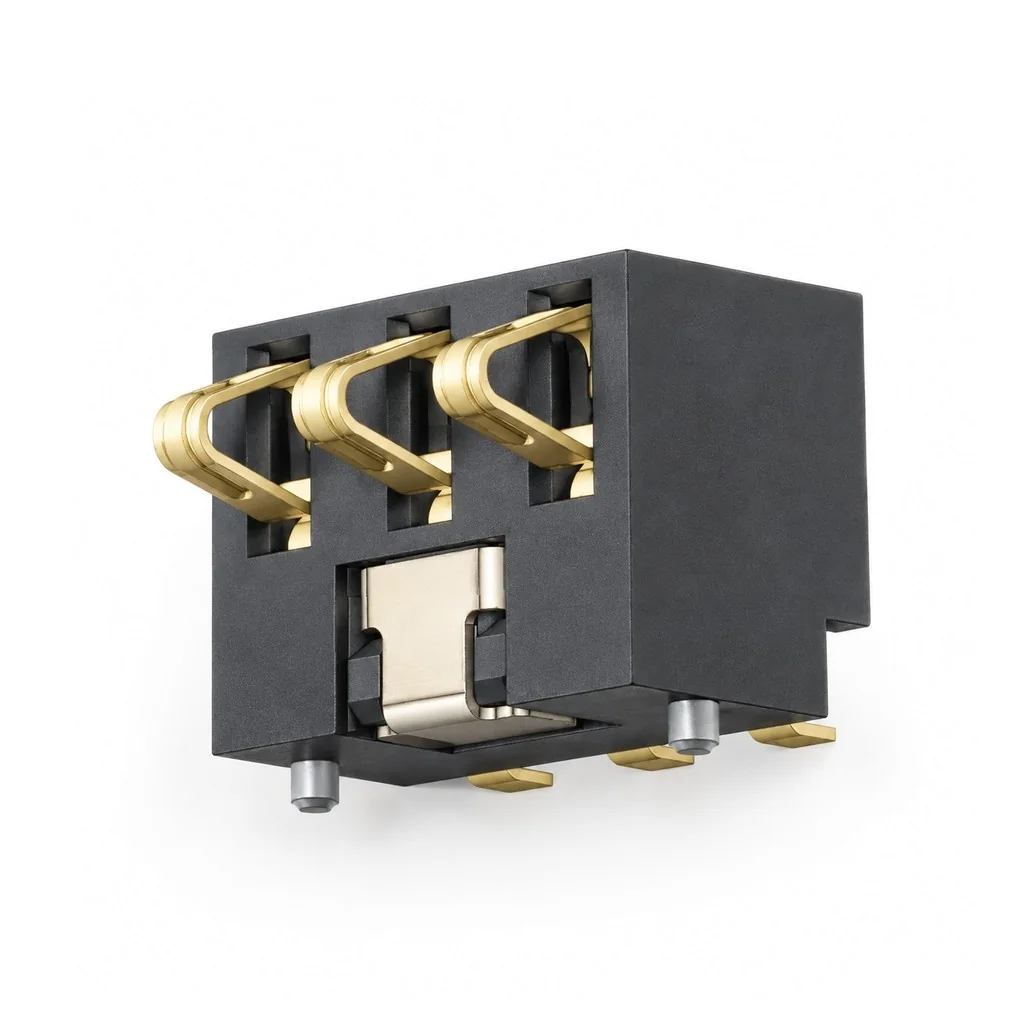
Start a power-tool battery connector comparison with the load profile and mating interface, then use public drawings to screen the mechanical fit. A pitch, pin count or CAD model alone does not establish the current rating or service life of a connector in a tool battery pack.
Kangsheng Electronics (Shenzhen Kangsheng Electronic Technology Co., Ltd.) publishes product photos, recorded geometry and downloadable files for selected battery connectors. The examples below show how to read that information before asking for a sample; they do not assign a power-tool rating to a listed part.
Build a mechanical shortlist from identifiable parts
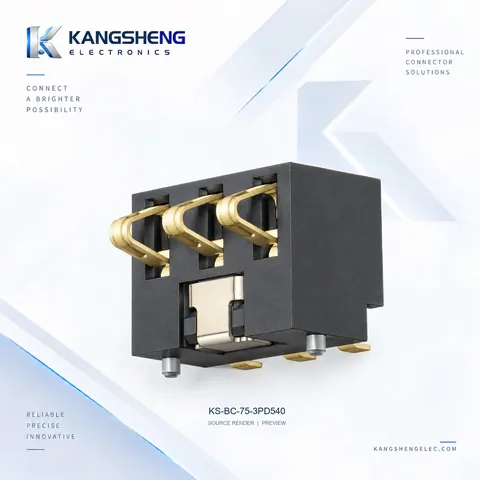
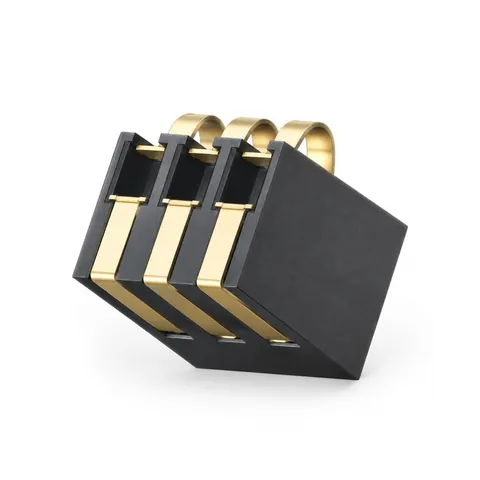
The public listing for KS-BC-75-3PD540 records a side-press spring battery connector with three pins, 2.5 mm pitch and 5.4 mm housing height. It links a BC-75-3PD family PDF and a 3D_BC-75-3PD540.STEP file.
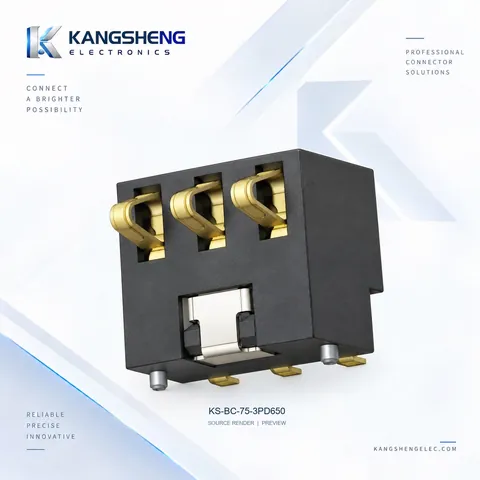
KS-BC-75-3PD650 has the same recorded pitch, pin count and contact style, with a 6.5 mm housing height and a model-specific 650 STEP file. The 1.1 mm height difference is a useful screening fact. Check the battery contact plane and available assembly space before selecting either height.
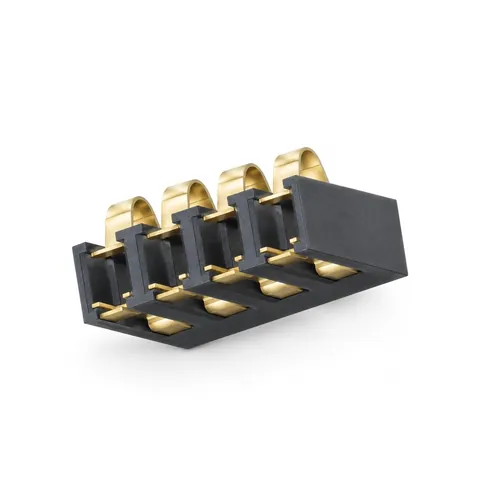
For a top-press layout, KS-BC-82-3P550 records three pins at 2.5 mm pitch and 5.5 mm housing height. KS-BC-82-4P300 records four pins at 2.5 mm pitch and 3 mm housing height. Each listing provides a corresponding PDF and 3D file. The different pin counts and heights deserve separate rows in a comparison, rather than one shared “2.5 mm connector” description.
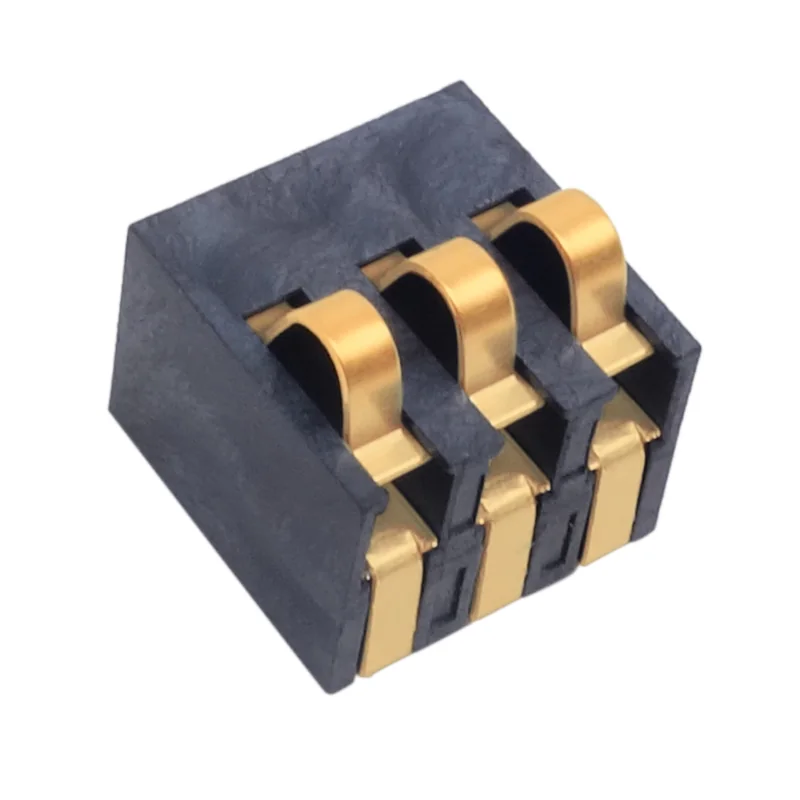
Another published drawing resource is the KS-BC-30-3PD series page: its document list contains the BC-30-3PD PDF and 3D_BC-30-3PD800.STEP.
Separate geometry from electrical evidence
Use the 540 drawing to locate the relevant model dimensions, and use the matching CAD file to inspect the assembly envelope. A family filename is not a substitute for identifying the dimensioned variant inside the drawing.
For the electrical comparison, request a continuous-current rating with its temperature-rise limit and test conditions. State the battery voltage, peak-current duration, ambient temperature, contact allocation and mating contact geometry. A rating measured with a different mating contact or conductor arrangement needs its own comparison with the proposed assembly.
Keep contact plating, contact resistance and mating-cycle evidence in separate entries. Ask for the plating material and thickness, resistance test conditions, and durability test method for the selected part. Photographs and contact colour cannot establish those properties.
Supplier documents illustrate why these dimensions should be separated: TE's power and signal battery-terminal page distinguishes power and signal terminals, while the Molex EXTreme Guardian datasheet lists electrical, mechanical and physical properties separately. Those published ratings belong to those suppliers' products; they are not ratings for the Kangsheng examples here.
Compare the mating interface before replacing an existing connector
Record the existing manufacturer and full part number, then compare contact positions, polarity, terminal assignment, retention features and board or enclosure dimensions. Identify the opposite contact or connector as well. Similar pitch and a matching pin count do not determine the complete mating geometry.
A useful sample request includes an annotated drawing of both sides of the interface and the battery insertion path. Mark which contacts carry power and which carry sensing or communication. Use the supplier's drawing revision and the selected CAD filename consistently through the sample build.
Send a sample request with separate acceptance criteria
- Mechanical fit: part number, pitch, contact count, housing height, mating drawing and assembly space.
- Electrical load: voltage, continuous current, peak duration, ambient temperature and the temperature-rise limit to evaluate.
- Contact system: mating material, plating evidence, resistance measurement and required mating cycles.
- Replacement comparison: current part number, annotated interface drawing, pin assignments and retention features.
- Supply request: sample quantity, proposed order quantity and the document set needed for evaluation.
The 540 and 650 listings record packing quantities of 800 and 700 per reel respectively. Keep those packing records separate from a requested sample quantity or negotiated order quantity.
Browse the spring battery connector category for a mechanical shortlist, then use the selected product's enquiry link to request the electrical and mating evidence needed for the actual battery pack.
Once the files are identified, review the power-tool battery interface requirements: pack insertion, final stops and the separation of power from sensing contacts.
CATALOGUE REFERENCES
Related products
YOUR NEXT DESIGN CHECK
Send us your drawing.
We’ll check pitch, height and compression against your assembly requirements.
Ask about this article